Brief
Describe what you want to build. Confirm interfaces, power, mechanical constraints, and the assumptions that matter.

PCB design, with a point of view
Synth helps you turn a product brief into an inspectable circuit, a constrained layout, and evidence you can review before anything gets handed off.
AI proposes. You approve the design.
The product, in the product
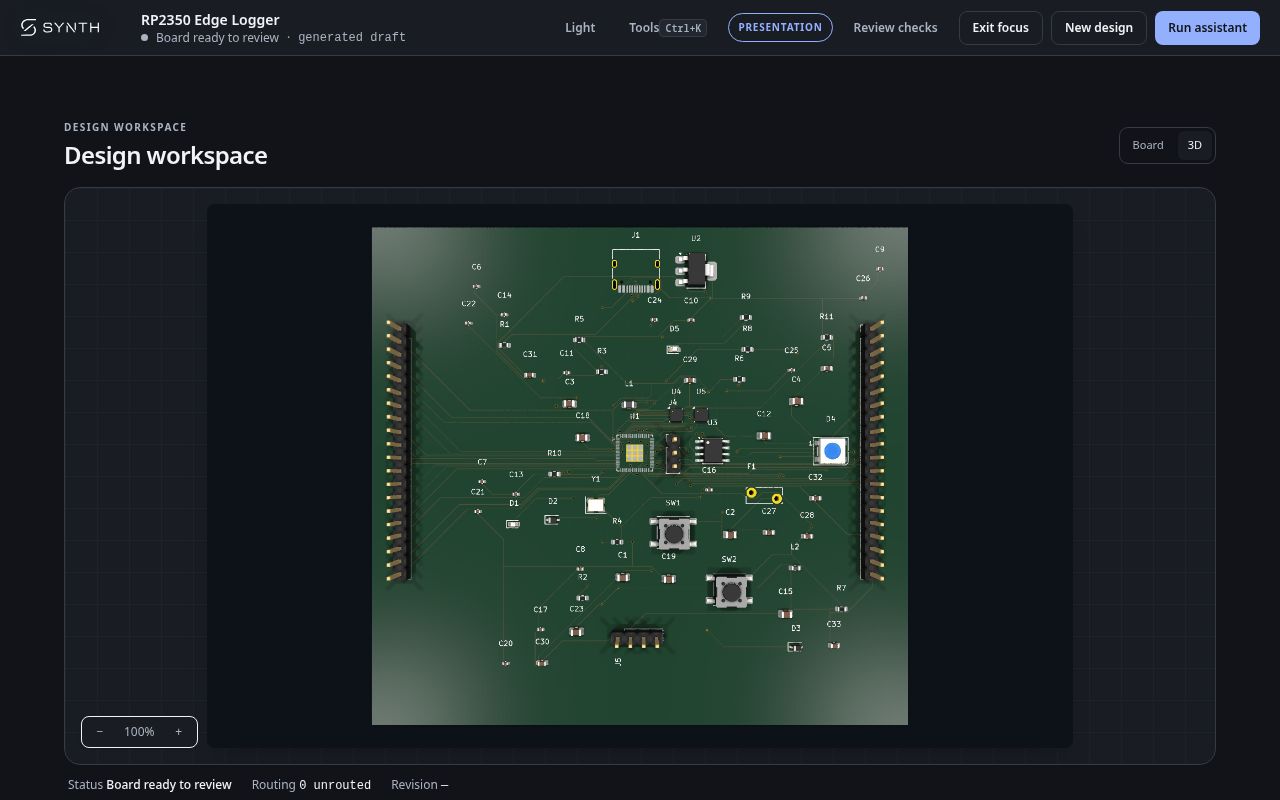
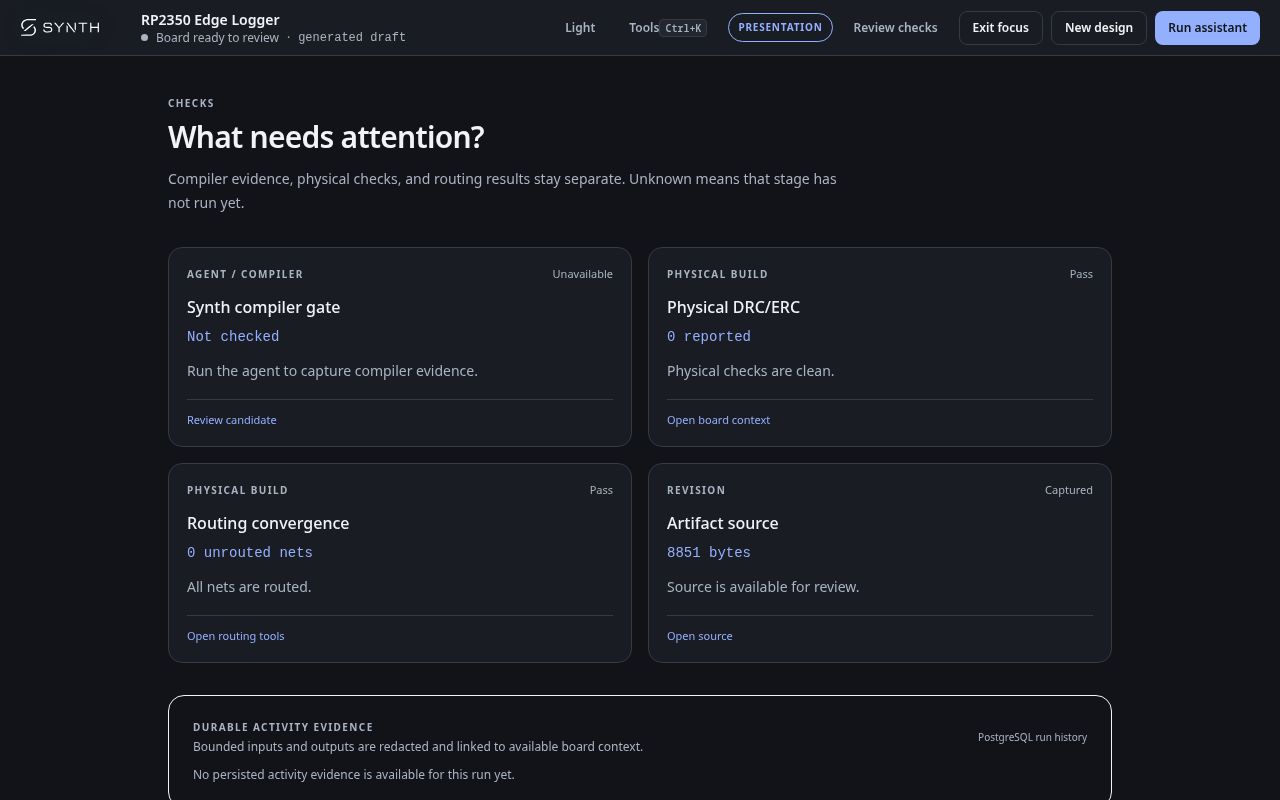
Synth keeps the design surface and its review context together. These are real workspace views: the routed board, a 3D inspection, and the review surface that sits around them.
Read the quick start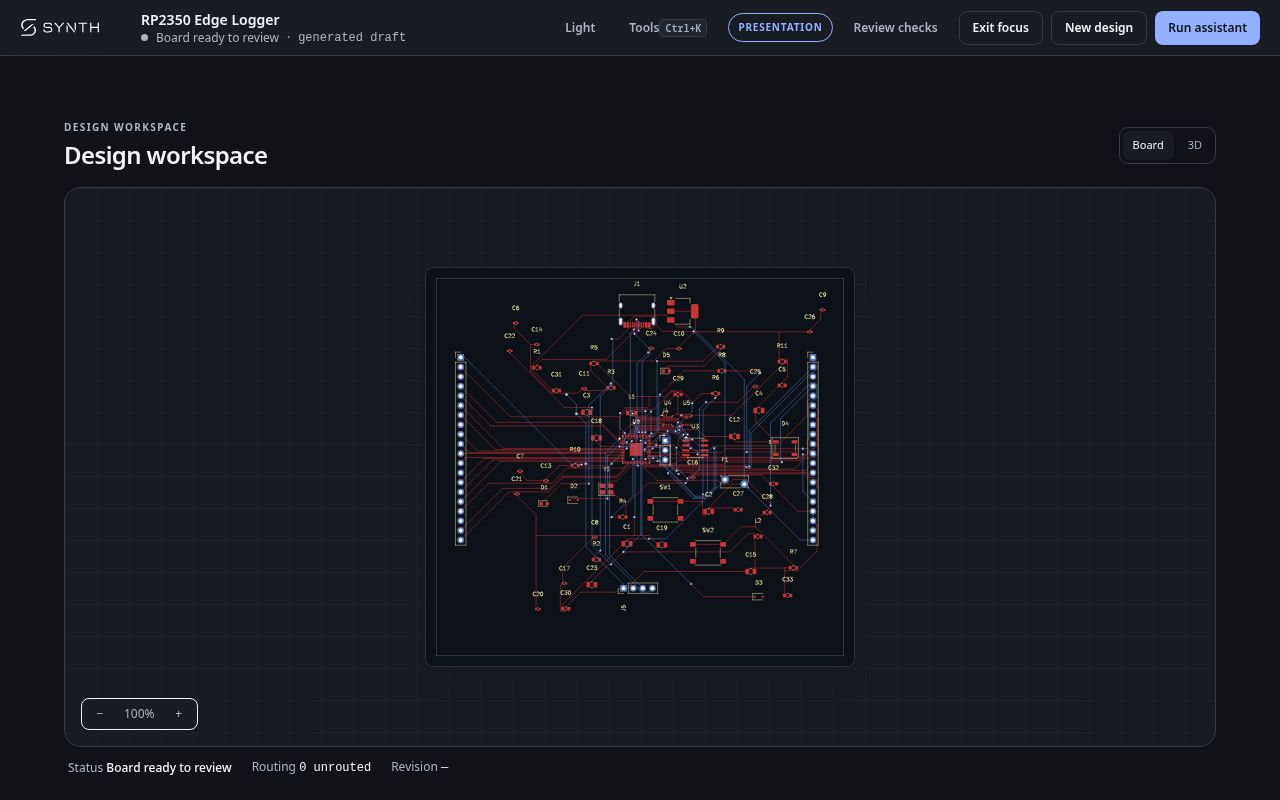
A clearer path through complexity
Every step leaves an understandable trail. Move quickly without making the important decisions invisible.
Describe what you want to build. Confirm interfaces, power, mechanical constraints, and the assumptions that matter.
Review the proposed architecture, parts, placement, and tradeoffs before a new revision is created.
Generate revision-bound KiCad artifacts and route with the external engine that fits the job.
Follow findings back to the design, inspect provenance, and decide what is ready for handoff.
The workspace, in context
Keep the assistant beside the working design—not in a chat window detached from it. Every proposal has a scope, every finding points somewhere, and every accepted change has a revision.
Explore the workspaceDesigned for trust
Checks, artifacts, notes, and decisions stay attached to the exact design they describe.
Proposals remain proposals until you review and accept them. The accepted design is protected.
Edit source, constrain placement, inspect nets, and challenge the assistant without leaving the workspace.
Good questions
No. Synth accelerates the design work and makes its assumptions visible. You remain responsible for review and approval of the exact revision.
Yes. Source editing, placement constraints, routing controls, checks, and exports remain direct engineering tools in the workspace.
Synth keeps the prior geometry, identifies the external router, and marks the result for review instead of presenting a failure as fabrication-ready.
Revision-bound KiCad artifacts, checks, routing evidence, provenance, and a package review surface. Manufacturing readiness is only claimed when the exact revision supports it.
The next board starts with a sentence.